Jelly Express by Pragmatic Play: How Candy Themes Evolve with Modern Slot Mechanics
The release of Jelly Express by Pragmatic Play reflects a broader shift in slot design, where familiar visual concepts are reworked to match modern gameplay expectations. Candy-themed slots have existed for years, yet their longevity depends on continuous mechanical innovation rather than aesthetics alone. In 2026, developers increasingly combine vibrant visuals with layered features such as cluster pays, cascading reels, and dynamic multipliers. Jelly Express fits into this trend by demonstrating how a simple theme can support more complex systems without losing clarity for players.
The Evolution of Candy-Themed Slots in Modern iGaming
Candy-themed slots gained traction due to their accessibility and universal appeal. Bright colours, simple symbols, and a relaxed atmosphere made them suitable for a wide audience. However, early versions of such games often relied on traditional paylines and limited bonus structures, which no longer meet the expectations of today’s players.
In recent years, developers like Pragmatic Play have shifted towards hybrid models. These combine familiar themes with mechanics borrowed from more advanced slot formats. Cluster pays systems, expanding grids, and cascading wins have become standard elements, allowing games to feel more dynamic while retaining visual simplicity.
Jelly Express demonstrates how this evolution works in practice. Instead of relying solely on visual charm, the game integrates layered mechanics that create momentum during gameplay. This approach reflects a broader industry trend where theme supports mechanics rather than defining the entire experience. :contentReference[oaicite:0]{index=0}
Why Candy Themes Remain Relevant in 2026
Despite the increasing complexity of slot mechanics, candy-themed games remain востребованными because they provide a clear and recognisable structure. Players can quickly understand symbols and visual cues, which reduces the learning curve when new mechanics are introduced.
Another factor is emotional neutrality. Unlike narrative-heavy slots, candy themes do not require context or storyline engagement. This allows developers to focus on gameplay flow and feature interaction without overloading the player with information.
Finally, these themes are adaptable. Whether combined with cluster pays, megaways-style grids, or multiplier systems, candy visuals remain flexible enough to support new mechanics without creating visual confusion.
Core Mechanics Behind Jelly Express
At its core, Jelly Express is structured around cluster pays rather than fixed paylines. Wins are formed by grouping matching symbols, which encourages a different approach to gameplay. Instead of tracking lines, players focus on symbol distribution across the grid.
The cascading system plays a key role in maintaining engagement. After a winning cluster disappears, new symbols drop into place, creating opportunities for consecutive wins within a single spin. This mechanic increases volatility while also providing moments of sustained activity.
Multipliers are integrated into the cascade chain, gradually increasing potential returns during a sequence. This layered approach ensures that each spin can evolve into a more complex outcome, rather than remaining a single isolated event.
How Mechanics Influence Player Behaviour
The shift from paylines to clusters changes how players interpret results. Instead of focusing on specific lines, attention moves to overall grid activity. This creates a more dynamic perception of gameplay, where multiple areas of the screen become relevant simultaneously.
Cascading features also alter pacing. Rather than waiting for the next spin, players experience extended sequences within a single round. This reduces downtime and maintains engagement without increasing bet frequency.
Multiplier systems add a strategic layer, even in games without traditional strategy. Players begin to recognise patterns in cascading sequences, which can influence how they perceive risk and reward during longer sessions.
Balancing Visual Simplicity with Mechanical Depth
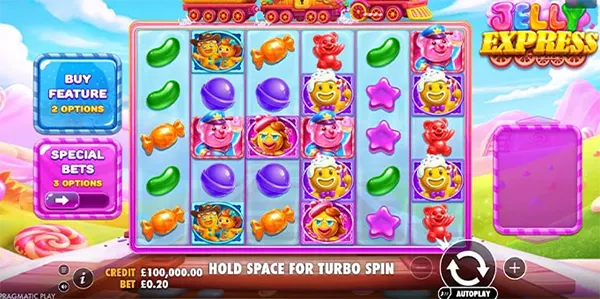
One of the key challenges in modern slot design is balancing visual clarity with mechanical complexity. Jelly Express achieves this by keeping symbols simple while allowing backend systems to handle more advanced calculations and interactions.
The colour palette and symbol design are intentionally minimalistic. This prevents visual overload during cascading sequences, where multiple changes occur rapidly. Players can follow the action without losing track of winning combinations.
At the same time, the underlying mechanics introduce depth through progressive multipliers and chain reactions. This dual-layer design ensures that both casual and experienced players can engage with the game at their preferred level.
What This Means for Future Slot Development
The approach used in Jelly Express highlights a broader direction for slot development in 2026. Themes are no longer the primary differentiator; instead, they act as a framework for delivering advanced mechanics in an accessible format.
Developers are increasingly prioritising systems that create continuity within gameplay. Features such as cascading wins and progressive multipliers allow a single spin to evolve, which aligns with modern expectations for interactivity.
As a result, future candy-themed slots are likely to become even more mechanically sophisticated. However, their success will depend on maintaining clarity and ease of understanding, ensuring that innovation does not come at the cost of usability.