Divine Fortune — a modern myth about luck, gods, and sudden turning points
Divine Fortune is one of those slot titles that still feels relevant in 2025 because it combines simple gameplay with moments that genuinely change the rhythm of a session. Built around classical mythology, the game leans into the idea that luck is not only random, but also unpredictable in timing — calm stretches can suddenly give way to dramatic re-spins, stacked wilds, or a jackpot round that makes the whole experience feel different. It’s widely available in licensed online casinos, and it remains well-known partly because it balances a recognisable theme with a clear set of mechanics that players can understand within minutes.
Why the theme works: gods, symbols, and the feeling of fate
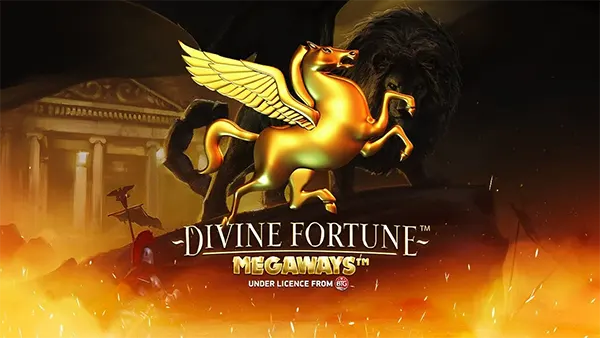
At first glance, the game uses familiar Greco-Roman imagery: temples, gold, winged creatures, and divine iconography. That matters, because the player doesn’t need to learn the story. Most people already associate those elements with power, protection, and “something bigger” deciding outcomes. The theme gives the game instant clarity — you understand the mood before the first spin, and that creates stronger emotional engagement than a purely abstract design.
What makes the theme effective is that it avoids overloading the player with lore. Instead, it relies on strong symbols. Pegasus isn’t just decoration — it represents momentum and sudden help. The shining coins suggest blessings, rewards, and rare opportunities. These are psychological triggers that naturally fit the slot concept: players interpret events through storytelling, even when they understand the maths is random.
The pacing also supports the theme. The soundtrack is ceremonial rather than frantic, and the overall visual tempo encourages steady play. That style matches a slot where excitement often arrives in bursts. The game feels like it’s building toward something, even when nothing major is happening — which is exactly what a “fate” narrative is supposed to do.
How features create the sense of “divine intervention” during play
The Falling Wilds mechanic is the clearest example of how the game turns theme into behaviour. When a Pegasus wild appears, it triggers a re-spin sequence. If you win, the wild drops down one position and the reel spins again, continuing until the wild falls off the grid. That structure doesn’t feel like a single bonus event — it feels like a presence that stays with you, and that’s why players often remember it.
A second layer of drama comes from how wilds interact. When another wild lands behind an existing falling wild, the reel can temporarily become fully wild and then split into two falling wilds. From a practical point of view, this increases the chance of larger connecting wins, especially when the wilds occupy central reel positions. From an emotional point of view, it creates a “sudden shift” moment — the exact feeling the theme is selling.
Free spins are comparatively straightforward, but they still support the fate concept. You don’t fill a meter or complete tasks. You receive spins because the right symbols aligned at the right time. That keeps the focus on timing, luck, and surprise — and it makes bonus triggers feel like a gift rather than a predictable step.
What Divine Fortune looks like in 2025: realistic expectations, not myths
In 2025, Divine Fortune is usually listed with an RTP around 96.59%, and it’s commonly described as medium to high volatility. In practical terms, that means you may experience longer sequences of smaller wins or dead spins, followed by feature-driven swings that can change the session quickly. For many players, this volatility profile is part of the appeal, because it supports the “quiet, then dramatic” pacing the theme implies.
It’s important to be honest about the base game ceiling. Many modern slots aim for huge maximum multipliers, but Divine Fortune’s base game is typically seen as more restrained. That doesn’t mean it’s weak — it means it’s designed as a jackpot-focused game, where the most memorable outcomes are more likely to come from the bonus mechanics than from routine line hits.
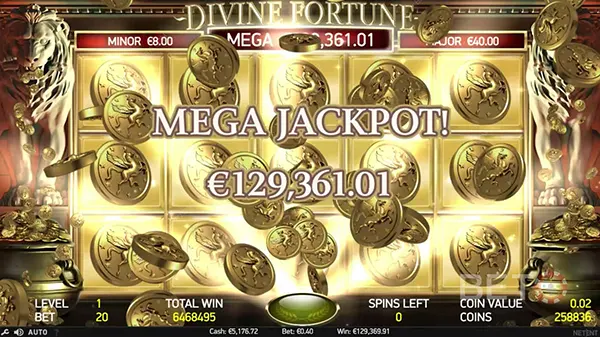
The jackpot aspect is the reason the title still attracts attention. The bonus game can award fixed prizes and tiered jackpots, and some versions include a progressive “Mega” jackpot that can grow significantly over time. Players who choose Divine Fortune in 2025 are usually doing so because they want that possibility — not because they expect constant giant multipliers on standard spins.
How the jackpot round actually works and why it feels so tense
The jackpot bonus is typically triggered by landing a set number of gold coin bonus symbols. Once triggered, the game shifts into a hold-and-spin style sequence: you receive a limited number of spins, coin symbols can lock in place, and new coins reset the spin counter. This creates a rising-tension loop where every extra coin feels meaningful, because it keeps the round alive.
During this feature, coins can award direct values and can also contribute toward jackpot tiers. Some payouts are immediate and predictable, while jackpots are the rare outcomes that give the feature its reputation. The structure is designed to feel like escalation: the longer you survive, the more the round feels like it’s building toward something significant.
The key point for a realistic approach in 2025 is that the jackpot round should be treated as an occasional event, not a routine expectation. It’s intentionally rare enough that it stays exciting when it happens. That rarity is part of why the game’s mythology works: the big moment isn’t something you “grind for” — it arrives unexpectedly, reinforcing the theme of destiny.
Enjoying the idea of fate without losing control: a responsible 2025 mindset
Divine Fortune is built to make people interpret patterns. That’s not unusual — it’s a common feature of theme-driven slot design. But responsible play depends on separating theatre from reality: the gods, fate, and “intervention” are storytelling tools, while results are determined by random outcomes and fixed probability settings.
A practical habit is to verify the RTP information inside the game, especially if a casino provides multiple configurations for different titles. Even if a slot is widely documented, the smartest approach is to treat the in-game help file and paytable as your primary source for the version you’re actually playing. This is one of the simplest ways to keep your expectations grounded.
The healthiest way to enjoy a fate-themed slot is to treat it as entertainment with firm limits. Set a budget, choose a stake size that suits the volatility, and stop when the session stops being fun. If you start feeling like the game “owes” you a bonus, that’s a warning sign — not a prophecy. It’s simply the human brain reacting to randomness.
How to play Divine Fortune in 2025 without falling for the illusion
First, accept the rhythm. Medium-to-high volatility means you may see quiet periods where little happens, followed by sequences where features drive the results. If you don’t enjoy that pacing, the game will feel frustrating. If you do enjoy it, those turning points will feel genuinely memorable — and that’s why many people still come back to it.
Second, judge the base game and the jackpot feature separately. The base game is about steady play, wild interactions, and occasional free spins. The jackpot feature is the outlier that creates the legends people talk about. If you measure the base game against jackpot expectations, you will almost always be disappointed. If you treat jackpots as a rare possibility, the overall design makes sense.
Finally, remember why the title has lasted: not because it promises constant fireworks, but because it tells a coherent emotional story. A Pegasus wild appears and refuses to leave. Coins lock in place and tension rises. Sometimes the session ends quietly, and sometimes it turns into a moment you remember. When you keep your limits firm, Divine Fortune remains what it’s meant to be — a modern myth about luck that stays enjoyable without becoming a trap.